standarts-1

Stainless Steel Tanks for Food, Beverage and Chemical Processing

Designing and manufacturing stainless steel tanks for dairy, food, beverage, cosmetic, and chemical plants — from 26-gallon balance tanks to 66,000-gallon storage vessels. Every tank is built to order in AISI 304 or AISI 316L, welded on automated TIG cells, and finished so that product does not cling and bacteria have nowhere to settle.

Order a bare storage vessel, or a fully instrumented process tank with agitator, heating-cooling jacket, insulation, load cells, and CIP spray balls. Below is every tank type we build, its working capacity, and the duty it suits best.

Process Tanks

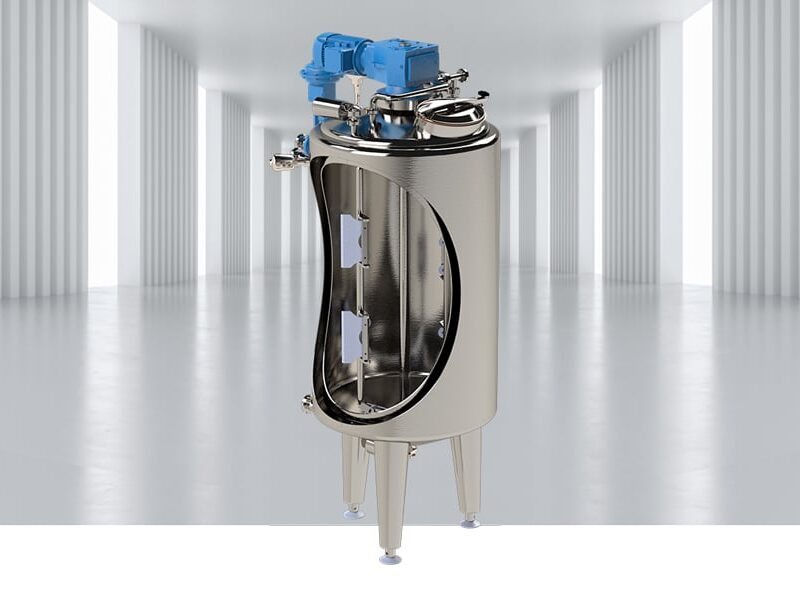
Process tanks are where the recipe actually happens — heating, cooling, holding, hydrating, standardizing. Manufacturing from 130 to 7,900 US gallons (500–30,000 L) in AISI 304 or 316L, with the jacket, agitator and instrumentation matched to your product rather than to a catalog number.

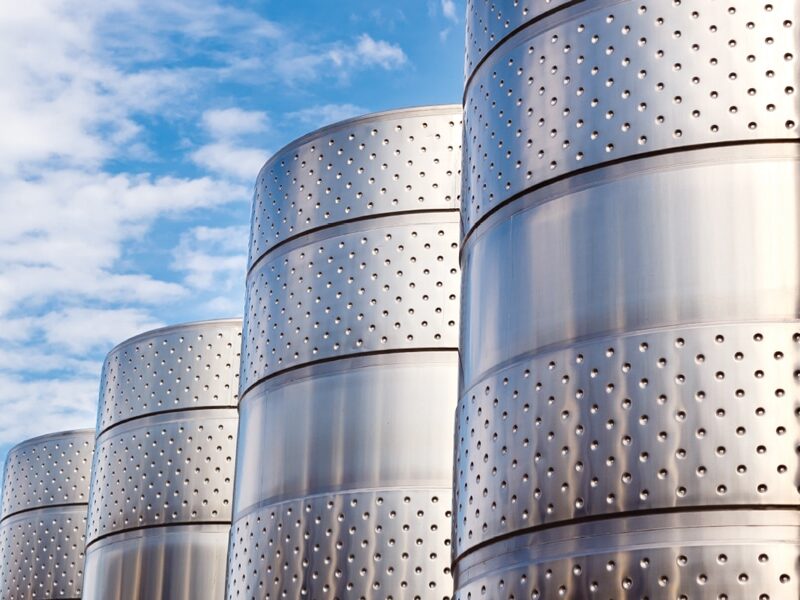
A typical build carries a dimple or half-pipe jacket for steam, hot water or glycol, polyurethane insulation under stainless cladding, a top- or bottom-entry agitator, and a CIP spray ball. Temperature, level and pressure transmitters feed a PLC, so every batch is logged and repeatable.

Dished heads, nozzle layout and leg height are all made to order — the tank drops into your existing line without re-piping the plant.

Stainless Steel Tanks

HOMMAK

storage tank

Storage Tanks

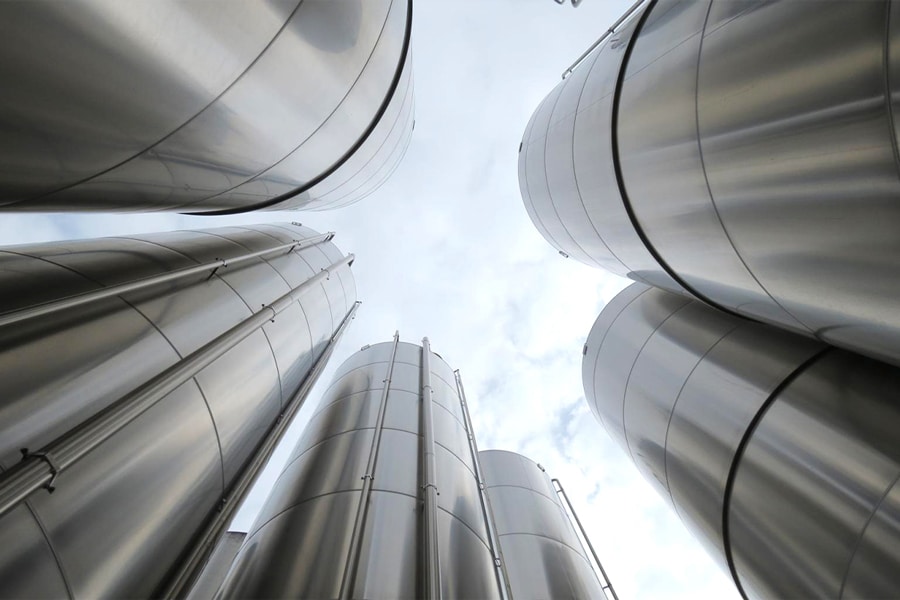
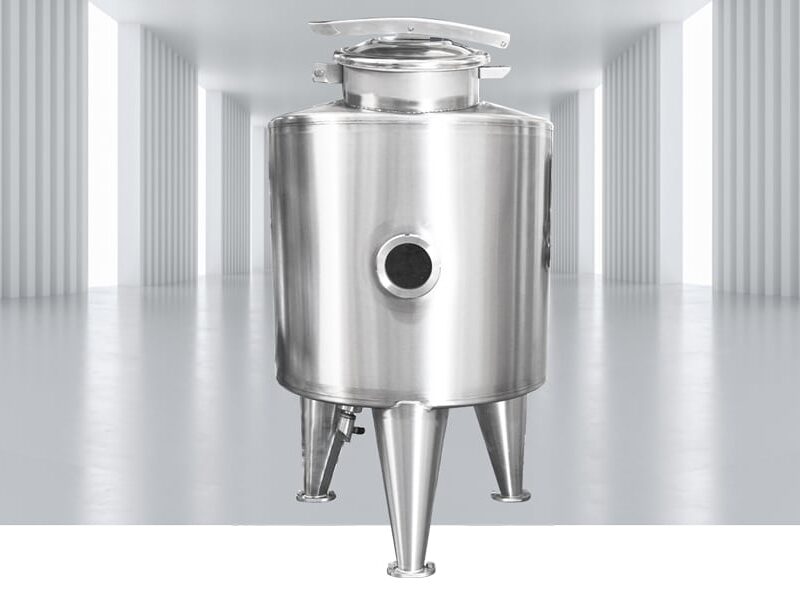
Storage tanks hold finished or intermediate product between process steps. Manufacturing vertical and horizontal vessels from 130 to 66,000 US gallons (500–250,000 L), welded on robotic TIG cells so seams stay uniform and fully penetrated over their whole length.

Raw and pasteurized milk, olive oil, wine, fruit juice, liquid egg, non-alcoholic beverages, cosmetic bases and chemical intermediates are all routine duties. Specify the vessel bare, or add a cooling jacket to hold milk at 39 °F (4 °C), insulation against ambient swing, a slow agitator to stop stratification, and load cells for live inventory.

Sloped bottoms, drain-clean outlets, and sanitary tri-clamp connections keep residue out of the tank and make product changeover fast.

Fermentation Tanks

Mixing tanks combine, dissolve and hold a batch homogeneous. Manufacturing from 13 to 2,640 US gallons (50–10,000 L), with the agitator chosen from your product’s viscosity and the result you need: a propeller for thin liquids, an anchor with wall scrapers for viscous or heat-sensitive batches, a turbine for gas dispersion, or a high-shear rotor-stator for powder wet-out and emulsions.

Many products need more than one. A slow anchor sweeping the wall paired with a fast disperser in the centre is a standard arrangement for sauces, creams, gels and cosmetic emulsions.

For inline powder induction or a finer, more stable droplet size, run the tank alongside a High Shear Mixer or High Pressure Homogenizer.

fermantation tank
industrial tanks

Industrial Tanks

  We are committed to delivering high-quality products that meet the exact requirements of our clients. Our tanks are designed and manufactured to the highest standards with mixers of various features, heating-cooling jackets and insulation in compliance with the rules of hygiene.

  At Hommak, we understand that the safety and quality of your product is of the utmost importance. That’s why our tanks are made of AISI 304 or AISI 316 stainless steel depending on the chemical properties of the product. We offer tanks with volumes between 500L and 30,000L, and our professional team is always available to answer any questions you may have.

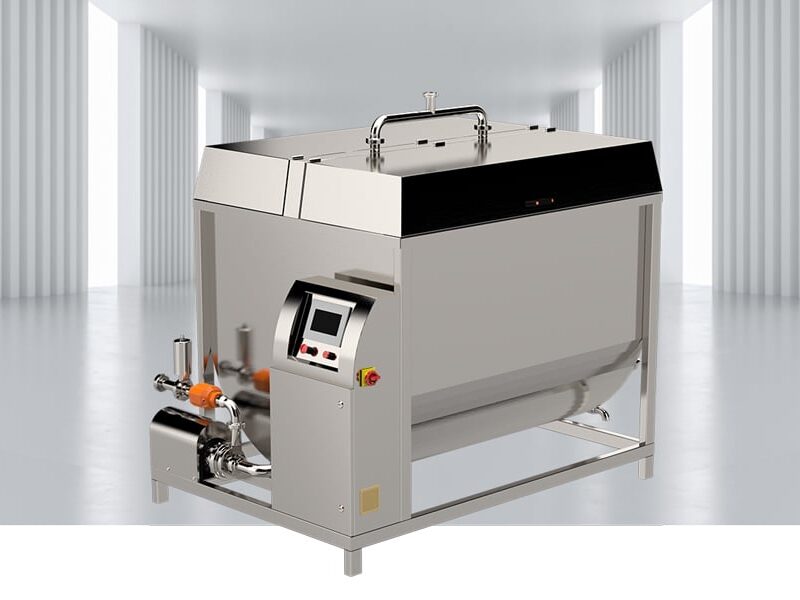
Fat (Oil) Melting Tank

Fat melting tanks bring solid blocks of cocoa butter, palm fat, butter oil, or hard shortening to a pumpable liquid without scorching them. Our tanks use a double-wall water jacket rather than direct steam, so the wall temperature never exceeds the water temperature and the fat cannot burn onto it.

An internal serpentine coil adds contact surface and cuts melt-out time sharply against a bare jacket. Temperature is held by PLC or by an electronic thermostat with PID control, and an integrated transfer pump moves the melted fat to the next stage.

Sizes run from boutique chocolatiers through medium-sized food plants to industrial chocolate production, and every tank is ready for integration into an automated line.

Fat Melting Tank Applications

Fat melting tanks can be used in a variety of applications, from industrial chocolate production to small scale food manufacturing. They can be used to melt chocolate fats, cocoa butter, and other types of fats used in the chocolate industry. Additionally, they can be used to melt fats used in a variety of other food products, such as dairy, sauces, and more.

fat oil melting tank
cip tanks

CIP Tanks

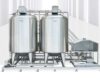
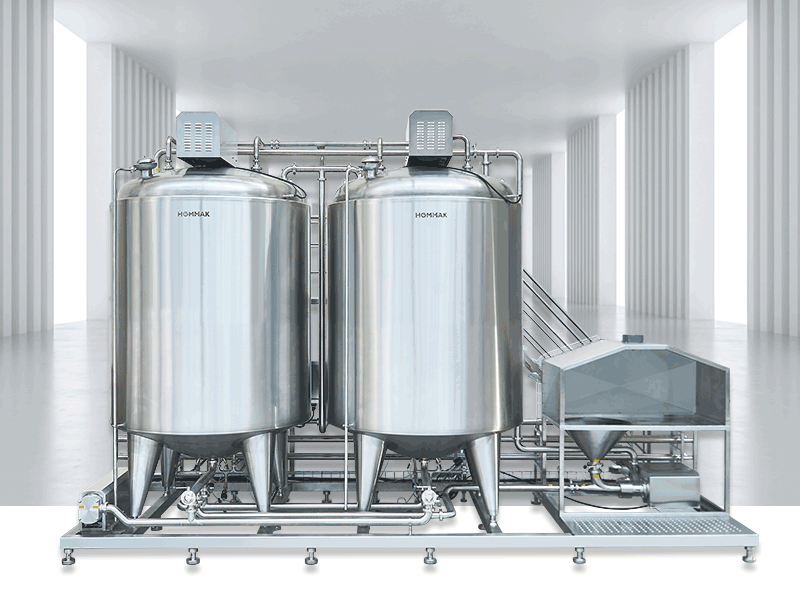
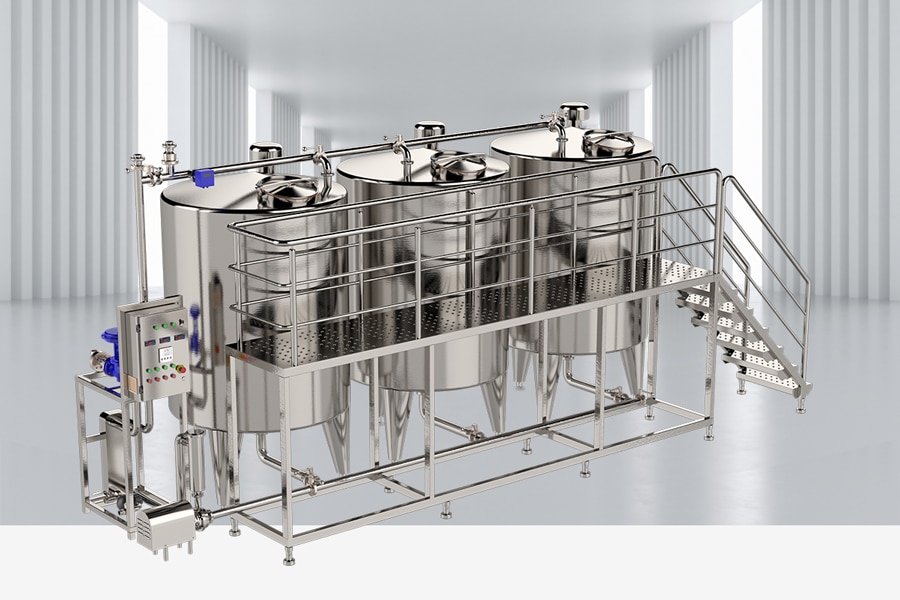
A CIP (clean-in-place) set cleans your pipework, tanks and heat exchangers without disassembly. The system is typically three or four insulated tanks — fresh water, caustic, acid and recovered rinse — with supply and return pumps, plate or tubular heating, conductivity and temperature control, and a PLC that sequences each circuit.

Conductivity control is what makes it economical. The controller watches the returning solution and diverts the leading and trailing edge of each phase back to its own tank instead of to drain, so caustic and acid are recovered and reused across cycles rather than mixed and dumped.

Standard chemistry is caustic soda for the alkaline step and nitric acid for the acid step, at concentrations and temperatures set per circuit and per soil type.

CIP Tanks Prices

  The prices of CIP tanks vary depending on the size and type of the tank. Smaller tanks are usually more affordable than larger ones, and the prices also depend on the features and quality of the tank. Hommak offers tanks with a range of features, so you can find the perfect one that fits your needs and budget.

 Choose Hommak For Your CIP Tank Needs

  For quality CIP tanks at affordable prices, look no further than Hommak. Our tanks are designed to reduce the time needed for cleaning and to recover the maximum amount of solution for the next cycle. With our thoughtfully designed tanks and commitment to customer service, you can trust Hommak for all your CIP tank needs. Contact us today to learn more about our CIP tanks and get a quote.

 The Benefits of Using CIP Tanks

  One of the main benefits of using CIP tanks is that it saves a lot of time and effort. The overall process is much faster and easier than manual cleaning, and the tanks automatically clean and reuse the same solution for the next cycle. The tanks are also designed to reduce the amount of solution needed for the cleaning process.

  Another benefit of CIP tanks is that they are cost-effective. The tanks are designed to recover the maximum amount of solution, which eliminates the need to purchase more cleaning solution for every cycle. This helps to reduce the overall cost of cleaning the food processing plant and makes it more cost-effective in the long run.

CIP Tanks Applications

  CIP tanks are widely used in the food and beverage industry, pharmaceutical industry, and dairy industry. The tanks can be used to clean a variety of equipment, including pipes, tanks, vessels, and pumps. The tanks are also used to clean parts of the food processing plant, such as floors, walls, and ceilings.

Balance Tank

A balance tank sits between the supply line and a pump inlet and keeps the liquid head above that pump constant. Without one, a pasteurizer starves or floods as upstream flow varies — and flow rate is exactly the variable your hold tube depends on.

Balance tanks are single-wall AISI 304, 26 to 66 US gallons (100–250 L), fixed on three legs, with a level sensor and a bottom inlet. The bottom inlet matters: filling from above whips air into the product, and entrained air ruins pump performance and foams the fill.

They are standard on HTST loops in dairy, juice and beverage plants, and are supplied as part of pasteurizer systems.

balance tank
ultraclean tanks

UltraClean (Aseptic) Tanks

UltraClean tanks protect a pasteurized product from recontamination while it waits to be filled. Manufacturing from 130 to 7,900 US gallons (500–30,000 L) with sterile-air vent filters, hygienic manway and valve designs, crevice-free internal welds, and a product-contact surface polished to remove the micro-roughness where biofilm starts.

The vessel holds a slight positive pressure of filtered air, so any leak path pushes air out rather than drawing room air in. Jacket, insulation and a low-shear agitator hold temperature and consistency through the buffer period.

Extended-shelf-life milk, juice, plant-based beverages, liquid egg, cosmetic emulsions and pharmaceutical intermediates are typical duties — anywhere the value that pasteurization added can be lost again in the holding tank.

Chocolate Tank

Chocolate tanks hold mass at working temperature between the conche, the melter and the depositor. Manufacturing in AISI 304 with a water-jacketed wall, a slow scraper agitator that keeps the mass moving without whipping air into it, and PID temperature control.

Holding chocolate is a narrow window. Run too cool and it sets against the wall; run too warm for too long and you lose flavour and gloss. Tight water-jacket control and a scraper that actually reaches the wall are what keep a batch inside that window.

Options include thermometers, transfer pumps, jacketed outlet valves and jacketed piping, so the mass never passes through an unheated section on its way out.

chocolate tank
honey molasses tank

Honey & Molasses Tank

Honey, molasses, grape molasses, fruit concentrates, jams and marmalades all lose colour and aroma if they are boiled hard. The vacuum boiling tanks lower the boiling point so water leaves the product below 133 °F (56 °C) — which protects the colour, flavour and heat-sensitive nutrients that open-kettle boiling destroys.

Tanks are AISI 304 and available with single, double, triple or multiple vacuum stages, sized to the evaporation rate you need. A low-speed agitator with wall scrapers keeps product moving across the heated surface so nothing caramelizes onto it.

Typical duties: jam and marmalade, fruit concentrate, syrup, jelly, creamed honey and molasses reduction.

Chemical Liquid Tanks and Reactors

Chemical service puts pressure, temperature swing, corrosion and abrasion on a vessel at the same time. Manufacturing stainless tanks and reactors for these duties with material grade, wall thickness, jacket type, and sealing arrangement taken from your process data sheet rather than from a standard range.

Where the process carries an explosion risk, the design accounts for it — rated components, proper bonding and earthing, and relief sizing reviewed as part of the engineering package.

Shop-built vessels are pressure- or leak-tested and documented before shipment. Where a tank exceeds road transport limits, it is fabricated on site. Send the product data, operating conditions, and applicable code, and we will engineer to it.

chemical liquid tanks
mixing tanks

Mixing Tanks

Mixing tanks combine, dissolve, and hold a batch homogeneous. Manufacturing from 13 to 2,640 US gallons (50–10,000 L), with the agitator chosen from your product’s viscosity and the result you need: a propeller for thin liquids, an anchor with wall scrapers for viscous or heat-sensitive batches, a turbine for gas dispersion, or a high-shear rotor-stator for powder wet-out and emulsions.

Many products need more than one. A slow anchor sweeping the wall paired with a fast disperser in the centre is a standard arrangement for sauces, creams, gels and cosmetic emulsions.

For inline powder induction or a finer, more stable droplet size, run the tank alongside a High Shear Mixer or High Pressure Homogenizer.

Mixing Tanks Applications

Mixing tanks are used in a wide range of industries, from food production and chemical industries to medical, pharmaceutical and water treatment facilities. No matter your application, our tanks will help you to achieve your desired results.

Get in Touch!

Send message

Related Products

How to Choose the Right Stainless Steel Tank

Five questions settle almost every tank specification.

  1. What is the product? Corrosivity and chloride content decide AISI 304 versus 316L. Acidity, salt and aggressive cleaning chemistry all push toward 316L.
  2. What happens inside? Storage only, or heating, cooling, mixing, fermenting, reacting? This decides jacket type and agitator style.
  3. How much, how often? Working volume and batch turnover decide the size — and whether one large vessel or two smaller ones serve you better.
  4. How clean must it be? Food contact sets the surface finish. Aseptic holding adds vent filters, crevice-free welds and positive pressure.
  5. What are the site constraints? Ceiling height, door widths, floor loading and available utilities decide the geometry — and whether the tank ships whole or is built on site.


Tank type Capacity Jacket Agitator Typical duty
Storage 130–66,000 gal Optional Optional, slow Milk, juice, oil, wine holding
Process 130–7,900 gal Yes Yes Heating, hydration, standardizing
Mixing 13–2,640 gal Optional Matched to product Sauces, creams, chemical blends
Fermentation 130–7,900 gal Zoned Low shear Yogurt, beer, wine, cultures
UltraClean 130–7,900 gal Yes Low shear Aseptic hold before filling
Balance 26–66 gal No No HTST pasteurizer feed
CIP Per circuit Yes No Caustic, acid, water, recovery
Fat melting Per line Water jacket Optional Cocoa butter, hard fats
Chocolate Per line Water jacket Scraper Tempered mass holding
Honey / molasses Per line Vacuum + jacket Low-speed scraper Jam, concentrate, syrup
Chemical Custom Custom Custom Reactors, corrosive service


Materials, Finishes and Standards

AISI 304 vs AISI 316L

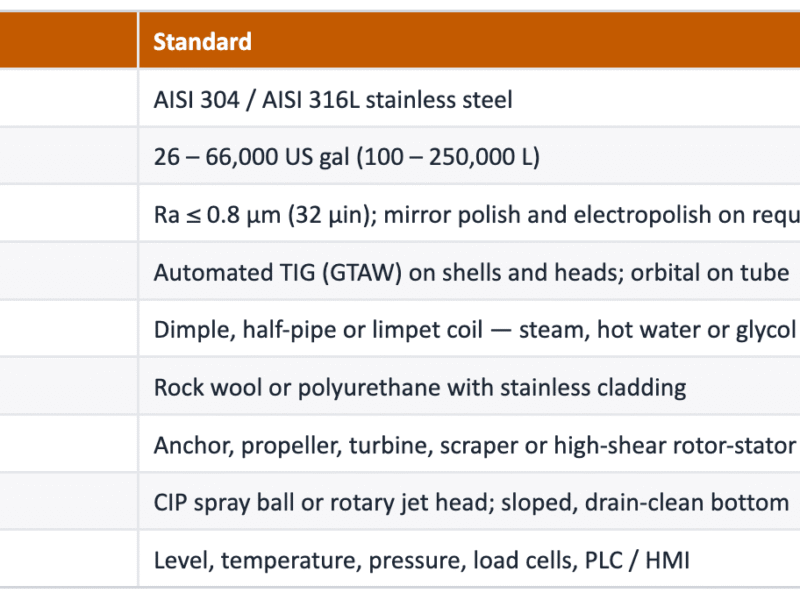
AISI 304 — roughly 18% chromium, 8% nickel, no more than 0.08% carbon — handles most dairy, food and beverage duties and is the default grade. AISI 316L adds 2–3% molybdenum and drops carbon to 0.03% maximum, which gives far better resistance to chlorides, brine and acids, and lowers the risk of sensitization at the weld. Choose 316L for salted or high-acid products, chlorinated cleaning regimes, coastal installations and pharmaceutical service.

Surface Finish

Bacteria colonize scratches, not smooth steel. Finishing product-contact surfaces to Ra ≤ 0.8 µm (32 µin) as standard, with mirror polishing and electropolishing available for aseptic and pharmaceutical duty. Internal welds are ground flush and passivated so no crevice is left at the seam.

Fabrication and Documentation

Shells and heads are welded on automated TIG cells for consistent, repeatable penetration; tube and small-bore work is orbital-welded. Vessels are pressure- or leak-tested and passivated before shipment, and are delivered with material certificates, weld records and test reports.

Frequently Asked Questions

What size stainless steel tanks does build?

From 26-gallon (100 L) balance tanks up to 66,000-gallon (250,000 L) storage vessels. Process, fermentation, and UltraClean tanks typically run 130 to 7,900 gallons (500–30,000 L). Every tank is made to order, so intermediate sizes and custom geometries are routine rather than exceptions.

Should I specify AISI 304 or AISI 316L?

Use AISI 304 for milk, juice, water, oils, wine and most food duties. Move to 316L when the product is salty, highly acidic or chloride-bearing, or when cleaning chemistry is aggressive. 316L costs more per pound but avoids the pitting that shortens a 304 tank’s life.

Do the tanks come with agitators and jackets?

Both are specified per tank. Jackets can be dimple, half-pipe or limpet coil, for steam, hot water or glycol. Agitators range from slow anchors with wall scrapers to high-shear rotor-stators. We size them from your product viscosity, batch volume and process target.

Are tanks CIP-cleanable?

Yes. Tanks are supplied with spray balls or rotary jet heads, sloped bottoms, drain-clean outlets, crevice-free internal welds and a polished product-contact finish. Also building the CIP tank sets, pumps and controls, so the vessel and its cleaning system can be engineered as one package.

What is a balance tank, and do I need one?

A balance tank keeps a constant liquid head above a pump inlet so flow through a pasteurizer stays steady. If you run an HTST loop, you need one. Without it, flow varies, hold time varies with it, and pasteurization becomes impossible to verify.

What is the difference between a process tank and a storage tank?

A storage tank holds product at a stable condition between steps. A process tank changes it — heating, cooling, hydrating, standardizing or reacting. Process tanks therefore carry a jacket, an agitator and instrumentation as standard, while a storage tank may need none of them.

Do you ship and install in the United States?

HOMMAK USA operates from Teaneck, New Jersey, and supplies tanks across North America. Shop-built vessels ship complete and tested. Where a tank exceeds road transport limits, it is fabricated on site. Installation, commissioning and operator training are quoted alongside the equipment.

Can a tank be integrated into my existing line?

Yes. Nozzle positions, leg heights, manway orientation, fitting standard and control interface are all fixed at the design stage so the vessel drops into your current layout. HOMMAK also supplies the homogenizers, pasteurizers, pumps and filling machines around it.

Request a Tank Specification

Tell us the product, the working volume, the process step and the utilities available on site, and our engineers will come back with a tank specification and a firm quotation. No obligation, and no generic catalog page in return.